
To submit an abstract before February 28th:
Conference Presentation
The Conference in Development and Climate Economics is jointly organised by SITES, AICC and the Fondazione Tor Vergata of the University of Rome Tor Vergata. It will be held at Villa Mondragone, Frascati, Rome, Italy, from May 27th to 29th, 2026.
The accelerating climate crisis poses complex and uneven challenges for societies across the globe. Understanding how climate change interacts with economic development, institutional capacity, technological progress, and social well-being is now one of the most urgent and intellectually demanding tasks for researchers and policymakers alike. This conference brings together leading scholars, practitioners, and international institutions to advance frontier knowledge on the intertwined agendas of development and climate change mitigation and adaptation.
We invite contributions that deepen our theoretical and empirical understanding across a broad range of interconnected themes such as climate economics, governance, and global policy; development, poverty reduction, and inequality; energy transition, technological innovation, and the green economy; human capital, institutions, and societal resilience; urban–rural dynamics, infrastructure, and sustainable land and water systems; historical perspectives on development and climate.
By fostering dialogue across economics, social sciences, environmental studies, history, engineering, and public policy, the conference aims to generate actionable insights that can guide effective climate mitigation and adaptation strategies globally. We particularly welcome interdisciplinary approaches, innovative methodologies, and policy-relevant research capable of informing international cooperation and advancing a just and sustainable development agenda.
The International XI SITES joint with the IV AICC Conference 2026 invites the submission of papers, long abstracts for research papers, or complete sessions of four papers related to the topics of the conference.





General topics covered:
- Climate economics, environmental governance, ethics, justice, and international climate policy;
- Development economics, poverty and inequality,
- Social inclusion, gender gaps, migration, and demography;
- Energy transition, green economy, renewable technologies, green finance, and technological innovation;
- Health, education, human capital, culture, institutions, peace and conflict, and community resilience;
- Urban–rural dynamics, sustainable mobility, infrastructure, land and water management, agriculture, and spatial development;
- Development and climate change in historical perspective.
Présentation des Keynotes Speakers
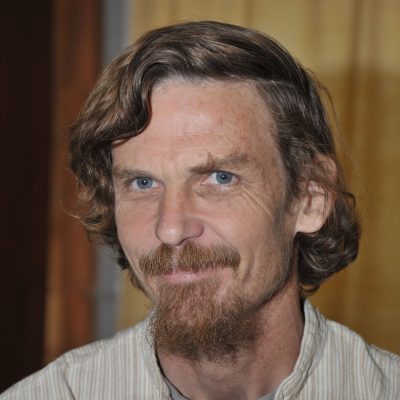
Jean Drèze :
is a development economist who has taught at the London School of Economics and the Delhi School of Economics, and is currently a visiting professor at Ranchi University as well as an honorary professor at the Delhi School of Economics. He has made wide-ranging contributions to development economics and public policy, particularly in India. His research spans rural development, social inequality, elementary education, child nutrition, health care, and food security—areas that all acquire renewed relevance and fresh analytical perspectives in the context of climate change.

Moshe Ben-Akiva :
works at the intersection of engineering and economics. He is a founding member of AICC. He pioneered random-utility models that form the basis of modern activity-based travel demand forecasting. He later integrated choice models with dynamic traffic assignment, leading to the development of the DynaMIT microsimulation framework, which combines real-time sensor data with behavioral models to predict congestion and evaluate control strategies. His research has extended to modelling individual behavior in the context of climate change.
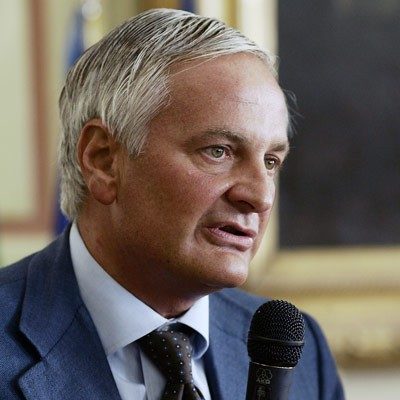
Ennio Cascetta :
was Full Professor of Transport Systems Planning from 1986 to November 2024, serving at the University of Reggio Calabria, University of Naples Federico II, and Universitas Mercatorum. He has also taught for over 30 years at Massachusetts Institute of Technology. Author of numerous books and articles, he has been ranked among the world’s top 1% most influential scientists by Stanford University. Cascetta held major leadership roles in Italian transport policy and infrastructure, including presidencies at Anas SpA and Metropolitana di Napoli, chairmanship at TECNE–Autostrade per l’Italia, and coordination of national transport and logistics planning, contributing to high-speed rail and regional transport plans.